Body Composition and Bloodwork
by
Erik Owings
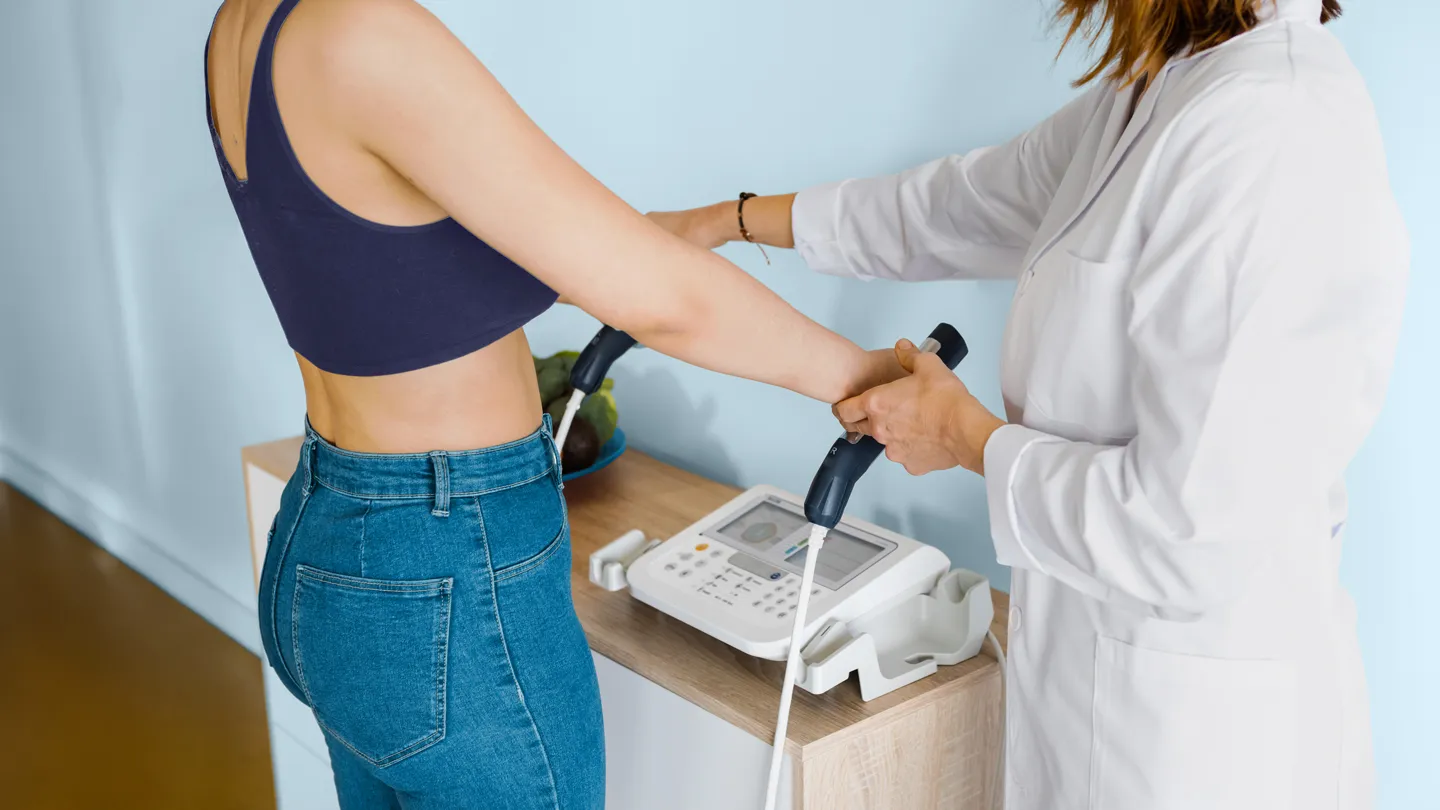
I always tell my clients that the combination of body composition and bloodwork almost always tells the whole story about your state of health and fitness. You can have less than optimal health and have pretty good bloodwork or body composition. Perhaps there are those with great bloodwork and body composition who have poor health and fitness, but I have yet to see them. Certainly great bloodwork and body composition doesn’t make you immune to illness, but it represents how well your overall training, nutrition, and lifestyle are working for you.
I won’t say that there is a one size fits all perfect level for bmi, lean body mass, bodyfat percentage, and all of the different bloodmarkers for everyone. However, I will say that everyone has their own perfect level for all of those. The closer we get to those levels, the better we will look, feel, and perform. For some people 12% bodyfat will be just right, while others may find it too high or too low. Also what is right for you now, may change as your body’s systems and their coherence with one another improves over time.
I think everyone should examine the bmi charts but not obsess over them. I myself am at the upper end of healthy weight and slightly into the overweight category according to bmi charts for my height. Georges is considered overweight for his height. We are both around or under 10% body fat. We both carry a lot of muscle for our height, relative to the general population. So again you have to consider many factors, instead of just listening to the dogma. Guidelines are not universal truths, but rather a good starting point of reference. That said, being very muscular with low bodyfat, can be unhealthy in many instances. There are many people who use and abuse anabolic hormones and live in a state of muscular obesity. They usually have many of the same issues that people who are obese with adipose tissue.
While there is no golden rule of body composition, good initial goals for men and women are 12% and 20% respectively. You may find those numbers too high or low, but if you want an initial goal to aim for, we suggest you start there. You should never blindly aim for a number, but rather assess how you look, feel, and perform. Many people who have taken the journey to get very lean, find there is a point of diminishing return for the effort, and an eventual point that is actually quite unhealthy.
You can do the pinch test and use a mirror if you don’t care about exact numbers. If you want a more accurate measurement you can use a bodyfat scale, or have someone do a caliper test. The most accurate test you can do is a dexa scan. I think the real test is: Do you love the way you look naked? Do you have high energy yet don’t feel hungry? Are you able to focus and do everything you need to get done with the proper intensity? If the answer is yes to all of those you are on the right path. If the answer is no to some or all, you have some work to do.
Bloodwork is another easy way to see what is going inside your body. I am not a big believer in total cholesterol. I feel that cholesterol is a very misunderstood topic and far too often people report and quote segments of studies while ignoring many other related factors. Bloodwork can get pretty complicated and it seems the medical industry always comes up with a few new key metrics to look for every couple of years and it seems to muddy the shallow waters, leaving many confused and oftentimes scared. I will most likely do a series of posts about each factor in the future, but the ones that seem to be most important for health are blood pressure, triglycerides, HbA1c, CRP, blood glucose, insulin, HDL cholesterol, then LDL, and perhaps more specifically LP(a). Other tests that can be very good are those that check your sex hormones and gut microbiome.
I am a big believer that if you look great, feel great, and perform great then you are probably going to also have great bloodwork. However if you are not really self aware and your look and feel good, and perform well is based on delusion rather than reality, then your bloodwork may be shit. It is best you test things at least in the beginning of your health journey just so you know where you are starting from. Then you can get a bloodwork panel once a year or however often you like, just to have the data. If something is out of whack there are usually a variety of lifestyle factors you can address first before taking any type of medication. Sometimes medications may help, but I think we are capable of correcting most metabolic issues with lifestyle.
While you don’t need to know your bloodwork or body composition when setting out to improve your health and fitness, it is usually a good idea to get both done, every so often so you can have an objective measure of progress. However if you really do look, feel, and perform at peak levels then I guess it really doesn’t matter. What I really believe is the amount of years you live isn’t nearly as important as the amount of life you put into the years. This isn’t a defeatist mentality of not caring about longevity, but I think your healthspan is far more important than just lifespan. Ideally we will live a long life full of health, and I think the best way to do that is adhere to maintaining your weight, body composition, and bloodwork at your true optimal levels for as long as you can.
The complete operating system used by the World’s top Athletes


Train using the exact system GSP followed at the highest level.
Progress step by step, with structured paths for every level.
Learn how to train in autonomy, not just follow workouts.
Real sessions you can run immediately, not theory or fluff.
A complete library of 50+ movements and exercises you’ll reuse for life.
Built to fit busy schedules, not hours-long sessions.
Train anywhere, with or without equipment.
Lifetime access to all updates and improvements.

BONUS
Weekly live Q&A to stay sharp, consistent, and on track.
Expanded nutrition and mental training modules added over time.
Train risk-free for 30 days.
If you decide it’s not the right system for you, you’ll get a full refund.
One-TIME PAYMENT
$289
JOIN THE PATH
Pay in 3 Installements
3x
$99
Total Value: $297
JOIN THE PATH

4.83/5 rating (703 reviews)
“I’ve followed training programs for years, but this is the first time I felt I understood why I was doing things. That alone changed how I approach training.”
Alex R.
“I was expecting workouts. What I got was structure, clarity, and a much calmer way to train. The way Georges explains things makes you slow down and trust the process.”
Marie L.
“Before this, I trained hard but inconsistently. I’d always restart. The Path helped me stop chasing motivation and focus on systems. That mindset shift was huge for me.”
Daniel K.
“Erik’s explanations made everything feel practical and accessible. Nothing feels overcomplicated, even when the concepts are advanced.”
Thomas B.
“I’m a beginner and was worried this wouldn’t be for me. I never felt behind. The progressions are clear and reassuring.”
Josh M.
“This course respects your intelligence. No hype. No shortcuts. Just clear principles you can actually apply.”
Julien P.
“I appreciated how much attention is given to mobility, breathing, and recovery. It made my training feel sustainable instead of exhausting.”
Marcus H.
“I like that you don’t need a gym or fancy equipment to get started. It removes a lot of excuses.”
Mert S.
“The structure is what sets this apart. Everything connects. You’re not just following workouts, you’re learning how to train.”
Nicolas D.
“This helped me stop overthinking and stop switching programs. I finally committed to one system.”
Emily C.
“The Path feels like something you can rely on long-term, not a 30-day reset.”
Paul T.
“You can tell this was built from experience. It feels calm, intentional, and honest.”
Tim G.
Frequently Asked Questions
Who is this program for?
Do I need prior training or MMA experience?
Is this only for fighters or athletes?
How is this different from other training programs?
How long are the sessions?
Do I need equipment or a gym?
How long does it take to complete the program?
Is there any live support?
Do I get lifetime access?
What if this isn’t right for me?
What happens after I buy?